
Everyone loves a good dinner party, but a recent soiree we planned on behalf of a well-known robotics company had a bit of an extra draw: They brought an actual robot to the dinner. The android spent the night near the head of the table, getting journalists genuinely excited before the first course arrived. It also enabled the company to focus the entire evening on the subject of product safety, a critical message they wanted to share.
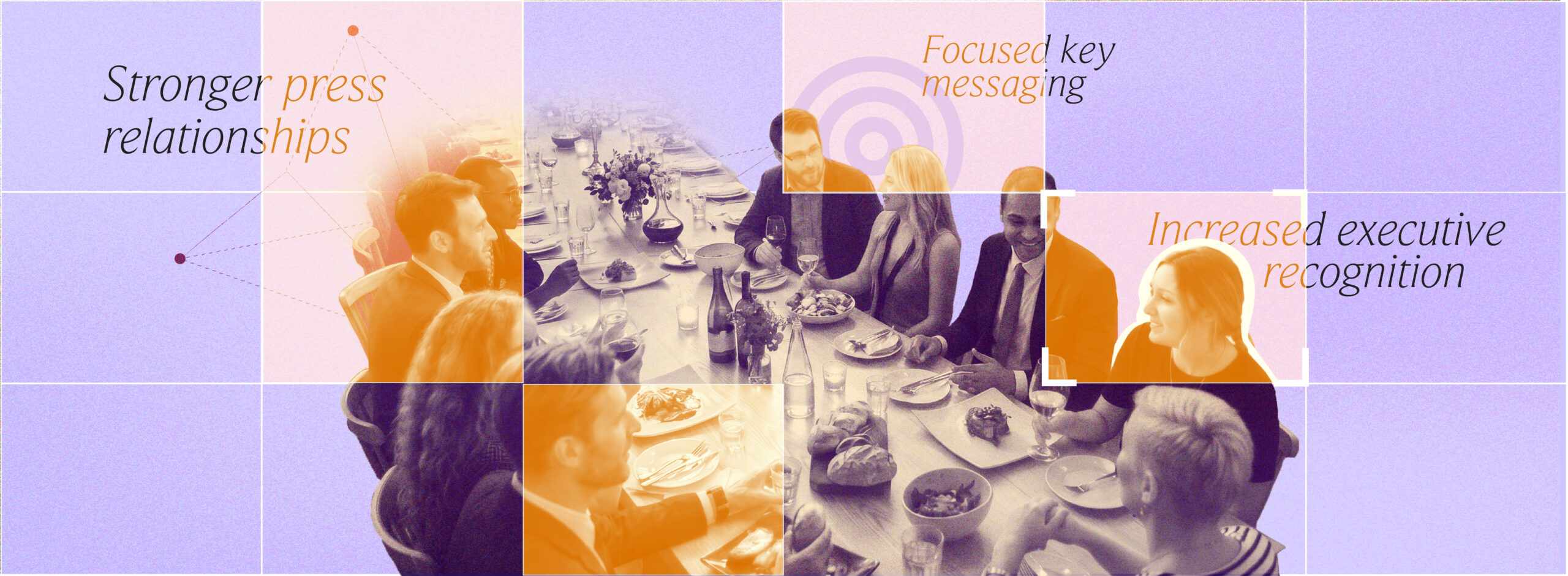
The lesson from bringing a robot to that meal was clear: Good media dinners can do more for a client’s press relationships than a month of cold pitching. Put the right reporters and the right executives around one table, add a great meal, and something shifts that an email never quite manages. Still, there’s more strategy behind a good media dinner than people expect. Here’s what separates the ones people are still talking about six months later from the ones that fizzle before dessert.
Quick Summary: Rules for a Successful Media Dinner
- Lead Time: Send invitations 3 to 4 weeks in advance to build a thoughtful pitching runway.
- Duration & Timing: Keep the event to 2.5 to 3 hours max, wrapping up by 9:00 PM local time.
- Guest List Strategy: Prioritize a tight list of relevant beat reporters over high headcounts.
- Venue Choice: Book hard-to-get private dining rooms rather than standard conference spaces.
- ROI Expectations: Focus on long-term relationship building rather than expecting immediate next-day headlines.
Why Media Dinners Outperform Cold Pitching
While cold pitching remains a staple of public relations, in-person media dinners build trust and rapport at a scale an inbox exchange simply cannot match. Assembling high-level sources within easy reach of reporters creates a high-value environment for both sides.
How to Assemble a Strategic Media Dinner Guest List
Everything starts with knowing your audience. Before you book anything, get clear on who you’re trying to reach and why. A dinner with a focus on labor and workforce reporters needs a different approach than one built for AI and venture capital press. It’s important to know the local market and what types of reporters are based there. It’s also a good idea to think beyond traditional media and invite podcasters, Substack authors, livestream hosts, and trade commentators.
Choosing the Right Executives and Sources
On the client side, think about who is actually a draw. A well-known founder or a rarely seen, big-name investor can fill a room fast. A C-suite member from an unknown startup in an unsexy space or a department head nobody outside the company has heard of usually can’t. Be honest about what your executives bring to the table. If the lineup needs a boost, look for additional voices—whether that’s another executive, a board member, a well-known customer, an outside expert, or a peer company with a complementary story to tell.
One of our most successful media dinners in recent months included our client and another company that was not our client. Journalists appreciated the broad access.
Vetting Media Attendees vs. Vanity Numbers
On the media side, resist the urge to invite as many names as possible. A tight, well-vetted list of reporters who actively cover the beat you care about will always outperform a long list padded with names who showed up for the free meal. Once you’ve got your list, think about room dynamics. A thoughtful seating chart, with team members spread out to keep conversation moving, matters more than people realize.
It’s also crucial to guide the dialogue thoughtfully. One of our team members, a former journalist, remembers attending a media dinner that relied on icebreaker questions to get conversation started—and one of those questions asked guests about their first kisses. While most journalists participated, several were clearly uncomfortable with the prompt. If you’re considering conversation starters, focus on thought-provoking professional queries instead of personal questions that could alienate your guests.
Choosing the Right Venue and Ambience
The venue does more work than most people give it credit for. A private room at a hot new restaurant or a dining room that’s genuinely hard to book is its own kind of pitch. Reporters who might pass on a generic conference room will make time for a seat at a place they’ve been wanting to try.
Ask your restaurant partners what has worked well for past corporate events. They often already know how to handle a group your size within your budget, which takes a lot of guesswork off your plate.
Beyond that, keep decor and extras simple. Branded menus and place cards are a nice touch. Elaborate swag is not required, and in some cases, journalists cannot accept gifts due to editorial policy anyway. The dinner itself, and the conversation happening around it, should be the primary draw.
Optimal Timeline and Agenda for a Media Dinner
What is the ideal timeline and duration for a media dinner?
Give the evening enough time to breathe, but not so much that it drags. Somewhere between two and a half and three hours tends to work best:
- Cocktails & Mingling (30–45 min): Allows guests to arrive and settle in comfortably.
- Seated Dinner (90–120 min): Where the real relationship building and substantive conversation happen.
Spell this structure out in the invitation itself. Reporters appreciate knowing what they’re walking into, and some will tell you upfront that they can only make the drinks portion, which is still a valuable touchpoint.
On the night of the dinner, start on time and stick to the schedule out of respect for attendees’ time. If you’re sharing big news, deliver it during the main meal rather than dessert, as reporters with long commutes or families at home often need to leave early. On a weeknight, the absolute latest a media dinner should conclude is 9:00 PM local time.
How far in advance should you invite journalists to a media dinner?
Lock your venue, guest list, and spokespeople early to build a solid pitching runway.
- 4 weeks out: The safest and most effective timeline for most companies.
- 3 weeks out: The absolute floor for sending invitations.
Big, unmissable executive names can sometimes get away with a shorter runway, but everyone else needs the extra time to pitch thoughtfully rather than blasting out last-minute invitations.
Setting Expectations: Measuring Media Dinner ROI
The biggest mindset shift for clients new to media dinners is understanding what success actually looks like. Occasionally, a dinner produces a direct run of articles in the weeks that follow. One dinner we organized for a fast-growing SaaS client generated three published articles within a couple of weeks—a standout result worth celebrating. However, that outcome is the exception, not the baseline.
Many journalists cannot directly write about a dinner due to newsroom ethics policies regarding complimentary meals. Furthermore, reporters at long-lead publications typically plan feature coverage several months in advance, meaning it may take time before a story fits into their editorial calendar.
The true return on investment (ROI) from a PR media dinner is usually slower and less visible:
- A beat reporter who now recognizes your executive by name.
- A relationship that leads to a major commentary request six months down the road.
- Higher response rates on future email pitches because the initial ice is already broken.
Make sure clients understand this trajectory upfront. A media dinner judged purely on next-week headlines will feel like a disappointment, even when it performed exactly as intended.
Key Takeaways for PR Teams
Media dinners reward the same instincts good storytelling does: know your audience, set the scene well, and give the narrative room to unfold naturally. Get the guest list, venue, and timing right, and manage expectations honestly—the payoff will arrive right on schedule, even if that schedule extends far beyond a single news cycle.